
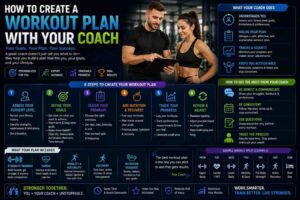
How to Create a Workout Plan with Your Coach
Creating a workout plan with your coach is one of the most effective ways to achieve fitness goals in a structured and safe manner. A coach helps you design a personalized program based on your current fitness level, lifestyle, and long-term objectives. This ensures that your training is both efficient and sustainable.
A well-designed workout plan is not just about choosing exercises, but about building a balanced system that includes strength training, cardio, mobility work, and recovery. Your coach evaluates your needs and creates a roadmap that gradually increases intensity while minimizing the risk of injury.
Communication plays a key role in this process. By sharing your goals, limitations, preferences, and progress regularly, your coach can make necessary adjustments to keep your plan effective and aligned with your development.
Over time, a coach-guided workout plan helps you stay consistent, track measurable progress, and avoid common mistakes such as overtraining or improper form. This structured approach significantly improves long-term fitness results and overall performance.
Understanding the Role of a Coach in Workout Planning
A fitness coach plays a much more comprehensive role than simply demonstrating exercises or counting repetitions. When learning how to create a workout plan with your coach, it is essential to understand that the coach acts as a strategist, educator, and accountability partner. Their primary responsibility is to design a structured program that aligns with your physical condition, fitness goals, lifestyle habits, and long-term health expectations.
In most cases, individuals struggle with consistency and direction when training alone. A coach eliminates this confusion by introducing a structured framework based on scientific principles of exercise physiology. This includes balancing training volume, intensity, recovery, and progression in a way that minimizes injury risk while maximizing results. A well-qualified coach also continuously monitors your form and technique, ensuring each movement is performed safely and effectively.
| Factor | Coach-Guided Workout Plan | Self-Designed Workout Plan |
|---|---|---|
| Personalization | Fully customized based on body, goals, and limitations | Generic or based on online templates |
| Progress Tracking | Regular monitoring with data-driven adjustments | Often inconsistent or manual tracking |
| Injury Risk | Lower due to professional supervision | Higher due to incorrect form or overload |
| Motivation Level | High due to accountability and coaching support | Often decreases over time |
| Results Efficiency | Faster and structured improvement | Slower and less predictable progress |
| Program Updates | Updated every 4–8 weeks by expert analysis | Rare or self-adjusted without expertise |
Why a Coach Is Important for Structured Training
A structured workout program is the foundation of sustainable fitness progress. Without structure, workouts often become random, inconsistent, or overly repetitive, leading to stagnation. A coach ensures that every session has a defined purpose, whether it is strength development, fat loss, endurance improvement, or mobility enhancement.
Coaches typically break programs into phases such as adaptation, progression, and performance. Each phase builds upon the previous one to ensure continuous improvement. This structured progression prevents overtraining while still challenging the body enough to stimulate growth and adaptation.
Additionally, a coach helps maintain accountability. Many individuals lose motivation when working out alone, but regular coaching sessions create responsibility and consistency. Over time, this structured support system becomes a major factor in achieving long-term fitness success.
Evidence-Based Fitness Approach
Professional fitness coaches often rely on evidence-based practices recommended by organizations such as the American College of Sports Medicine. These guidelines are developed from extensive research in exercise science, physiology, and human performance.
An evidence-based approach ensures that your workout plan is not based on trends or guesswork but on proven scientific principles. For example, progressive overload requires gradually increasing resistance or intensity over time. Coaches also apply specificity, recovery optimization, and periodization principles to ensure balanced development.
This scientific foundation reduces injury risk and improves training efficiency. Instead of wasting time on ineffective routines, your coach builds a program tailored to your body’s response patterns.
Personalized Guidance vs Generic Workouts
One of the biggest advantages of working with a coach is personalization. Generic online plans do not account for differences in age, body composition, fitness level, or injury history. A coach creates a fully customized program instead.
This includes selecting exercises based on mobility level, adjusting intensity, and modifying workouts to fit daily schedules. Someone with limited time may follow short high-intensity routines, while another individual may require low-impact training due to joint issues.
A coach continuously adapts the plan as you progress, ensuring long-term effectiveness and preventing plateaus.
Setting Clear Fitness Goals with Your Coach
Setting clear fitness goals is one of the most important steps in how to create a workout plan with your coach. Without well-defined goals, training becomes unfocused and lacks measurable progress, making it difficult to stay consistent and motivated over time.
During the initial assessment, your coach evaluates your fitness expectations such as fat loss, muscle gain, strength improvement, endurance building, or overall health enhancement. These expectations are then converted into structured and realistic objectives with clear timelines.
A well-defined goal-setting process ensures that every workout has a purpose and contributes directly to your overall fitness journey. It also helps your coach design a program that matches your needs and capabilities effectively.
Defining Short-Term and Long-Term Goals
Short-term goals focus on immediate progress and help maintain motivation during the early stages of training. These may include improving stamina, increasing strength, or mastering proper exercise form within a few weeks.
Long-term goals, on the other hand, focus on larger achievements such as body transformation, significant weight loss, or athletic performance improvements over several months.
Balancing both types of goals ensures that you stay motivated in the short term while still working toward meaningful long-term success.
SMART Goal Method in Fitness Planning
The SMART goal method is a structured approach that turns vague fitness goals into clear and actionable targets. It stands for Specific, Measurable, Achievable, Relevant, and Time-bound, making goal setting more effective and realistic.
For example, instead of saying “I want to get fit,” a SMART goal would be “I want to lose 5 kg in 8 weeks through structured strength and cardio training.” This makes progress easier to track and evaluate.
Using the SMART method improves accountability, helps measure results accurately, and keeps both the client and coach aligned throughout the fitness journey.
Aligning Goals with Lifestyle Needs
A successful workout plan must fit realistically into your daily lifestyle to ensure long-term consistency. Coaches consider factors such as work schedules, sleep patterns, stress levels, and personal responsibilities when designing fitness goals.
When fitness goals are aligned with lifestyle needs, it becomes easier to maintain discipline without feeling overwhelmed or burned out. This balance is essential for sustainable progress.
By integrating fitness into everyday life, the workout plan becomes a long-term habit rather than a temporary effort, leading to better results and lasting health improvements.
Assessing Your Fitness Level and Health Background
Assessing your fitness level and health background is a crucial step in how to create a workout plan with your coach. A detailed evaluation helps establish a clear baseline of your current physical condition, which is essential for designing a safe, effective, and personalized training program.
During this process, coaches assess key areas such as strength, endurance, flexibility, posture, and overall body composition. This provides a complete picture of your fitness level and helps identify areas that need improvement.
Health history is also carefully reviewed, including past injuries, medical conditions, and physical limitations. This ensures that the workout plan is safe and avoids any movements that could cause discomfort or complications.
Fitness Assessment Test Basics
Fitness assessment tests are commonly used to measure your current physical capabilities. These may include exercises such as push-ups, squats, planks, and basic cardio tests to evaluate strength, stamina, and endurance levels.
The main purpose of these tests is not to judge performance but to understand your starting point. This information helps the coach design a program that matches your ability level and supports gradual improvement.
By analyzing test results, coaches can create a more structured and personalized training plan that aligns with your fitness goals and progression speed.
Identifying Limitations and Injuries
Identifying limitations and previous injuries is an essential part of creating a safe workout plan. Coaches carefully examine any joint issues, muscle imbalances, or past injuries that may affect performance.
Based on this information, exercises are modified or replaced to avoid unnecessary strain and reduce the risk of reinjury. This ensures that training remains both effective and safe.
This personalized approach allows individuals to train confidently while protecting their body and supporting long-term physical health.
Baseline Measurements for Progress Tracking
Baseline measurements provide a clear starting point for tracking fitness progress over time. These may include body weight, body fat percentage, muscle mass, and strength levels.
By recording these metrics at the beginning, coaches can accurately measure improvements and adjust the workout plan based on real data rather than assumptions.
This data-driven approach ensures that progress is measurable, structured, and aligned with long-term fitness goals, making it easier to stay motivated and focused.
Designing a Personalized Workout Structure
Designing a personalized workout structure is the stage where all goals, assessments, and health data are combined to create a complete training plan. A coach develops a balanced program that includes strength training, cardiovascular exercise, mobility work, and proper rest to ensure overall development and recovery.
This structured approach ensures that every workout session serves a clear purpose and contributes to long-term progress. It also helps maintain balance between intensity and recovery, which is essential for avoiding burnout and injuries.
A well-designed workout structure is flexible and can be adjusted over time based on performance, progress, and changing fitness goals.
| Training Component | Purpose in Plan | Example Activities | Recommended Frequency | Coach Focus Area |
|---|---|---|---|---|
| Strength Training | Build muscle, strength, and bone density | Squats, push-ups, deadlifts, resistance machines | 3–5 times per week | Progressive overload, form correction |
| Cardiovascular Training | Improve heart health and endurance | Running, cycling, HIIT, brisk walking | 2–4 times per week | Intensity control, fat loss optimization |
| Mobility & Flexibility | Improve movement range and prevent injury | Stretching, yoga, mobility drills | Daily or post-workout | Injury prevention and posture correction |
| Recovery Sessions | Support muscle repair and prevent fatigue | Light walking, foam rolling, rest days | 1–2 days per week | Recovery timing and fatigue management |
| Core Training | Improve stability and balance | Planks, leg raises, stability exercises | 2–3 times per week | Core activation and functional strength |
Strength Training Program Design
Strength training is a core component of any personalized workout plan because it helps build muscle, improve bone density, and increase overall physical strength. Coaches design strength programs based on individual experience levels and specific fitness goals.
Beginners may focus on bodyweight exercises and basic resistance training, while advanced individuals may follow structured weightlifting programs with progressive difficulty.
A properly designed strength training program ensures steady improvement in performance while maintaining proper form and reducing the risk of injury.
Cardio and Conditioning Balance
Cardiovascular training plays a key role in improving heart health, lung capacity, and overall endurance. It also supports fat loss and improves energy levels throughout the day.
Coaches often combine steady-state cardio, such as walking or jogging, with high-intensity interval training (HIIT) depending on the individual’s goals and fitness level.
This balanced approach ensures that the body develops both endurance and recovery efficiency, leading to better overall fitness performance.
Progressive Overload Planning
Progressive overload is a fundamental principle in workout design that ensures continuous improvement over time. It involves gradually increasing the difficulty of training through higher weights, more repetitions, or increased intensity.
This gradual progression challenges the muscles and prevents performance plateaus, allowing consistent strength and endurance development.
When applied correctly, progressive overload helps individuals achieve long-term fitness gains while minimizing the risk of overtraining or injury.
Tracking Progress and Making Adjustments
Tracking progress is a vital part of how to create a workout plan with your coach because it ensures that the training program remains effective and aligned with your goals. Coaches continuously monitor improvements in strength, endurance, flexibility, and body composition to evaluate overall development.
This ongoing evaluation helps identify what is working well and what needs modification. Without proper tracking, it becomes difficult to measure success or make informed changes to the workout plan.
By consistently reviewing progress, both the coach and client can stay focused, motivated, and committed to long-term fitness success.
Workout Tracking Systems
Workout tracking systems such as mobile apps, fitness journals, and wearable devices play an important role in monitoring daily and weekly progress. These tools record workout details, nutrition intake, and consistency levels.
The collected data helps coaches analyze performance patterns and identify areas that need improvement or adjustment. It also provides a clear picture of how the body is responding to training over time.
With accurate tracking systems in place, workout plans can be adjusted more effectively based on real data rather than assumptions.
Weekly and Monthly Progress Reviews
Weekly and monthly progress reviews are essential for evaluating overall performance and ensuring that fitness goals remain on track. These sessions allow coaches to assess improvements and address any challenges faced during training.
During reviews, progress is compared against baseline measurements and short-term goals to measure effectiveness. This helps in maintaining accountability and structured development.
Regular feedback sessions also help boost motivation by making progress visible and encouraging continued effort toward long-term goals.
Adapting the Plan Over Time
A workout plan should never remain static, as the body continuously adapts to training. Coaches regularly modify exercises, intensity levels, and training volume based on progress and performance.
These adjustments help prevent fitness plateaus and ensure that the body continues to be challenged in a safe and effective way.
By evolving the plan over time, individuals experience consistent improvement while maintaining balance, safety, and long-term sustainability in their fitness journey.
Nutrition, Recovery, and Lifestyle Integration
Nutrition, recovery, and lifestyle habits are essential components of how to create a workout plan with your coach because fitness success depends on more than just exercise. A well-rounded approach ensures that the body has the fuel, rest, and balance needed for optimal performance and long-term results.
Without proper nutrition and recovery, even the best workout program can fail to deliver consistent progress. These factors support muscle repair, energy restoration, and overall physical and mental well-being, making them just as important as training itself.
A successful fitness plan integrates diet, sleep, stress management, and recovery strategies into daily life, ensuring sustainable improvements and long-term health benefits.
Importance of Balanced Nutrition
Balanced nutrition is essential because it provides the body with the energy required for workouts and the nutrients needed for recovery. Macronutrients such as protein, carbohydrates, and healthy fats all play important roles in supporting physical performance.
Protein helps repair and build muscle tissue, carbohydrates provide energy for workouts, and fats support hormone function and overall health. A lack of proper nutrition can slow progress and increase fatigue.
By maintaining a consistent and well-structured diet, individuals can significantly improve strength, endurance, and recovery efficiency over time.
Recovery and Rest Days
Recovery and rest days are a critical part of any effective workout plan because they allow muscles to heal and grow stronger after training sessions. Without proper rest, the risk of overtraining and injury increases significantly.
Rest days do not mean complete inactivity; light movement such as walking or stretching can support circulation and recovery. This helps reduce muscle soreness and improve overall flexibility.
Incorporating regular rest ensures that the body remains strong, resilient, and capable of sustaining long-term fitness progress without burnout.
Sleep and Stress Management
Quality sleep plays a major role in physical recovery, energy restoration, and muscle growth. During deep sleep, the body repairs tissues and regulates hormones that influence performance and recovery.
Stress management is equally important because high stress levels can negatively impact motivation, energy levels, and even physical recovery. Chronic stress may also slow down progress and affect overall health.
By maintaining healthy sleep habits and managing stress effectively, individuals can enhance workout performance, improve recovery speed, and achieve better long-term fitness results.
Common Mistakes to Avoid When Working with a Coach
Working with a fitness coach can significantly improve your results, but certain common mistakes can slow progress or reduce the effectiveness of your training plan. Many individuals expect quick results without following instructions properly or maintaining consistency, which often leads to disappointment.
A successful coach-client relationship depends on communication, trust, and commitment. When these elements are missing, even a well-designed workout plan may fail to deliver expected outcomes. Avoiding basic mistakes ensures safer training and better long-term progress.
Understanding and correcting these issues early helps maximize the benefits of professional guidance and creates a more structured and effective fitness journey.
One of the most common mistakes is ignoring the coach’s instructions or modifying workouts without guidance. Coaches design programs based on your fitness level, goals, and limitations, so skipping or altering exercises can disrupt progress and increase injury risk.
Another major issue is having unrealistic expectations, such as expecting rapid transformation in a very short time. Fitness progress requires patience, consistency, and gradual improvement rather than quick fixes.
Inconsistency is also a key problem, as irregular training schedules reduce effectiveness and slow down results. Sticking to the plan, following instructions, and maintaining regular communication with your coach are essential for achieving long-term success.
Frequently Asked Questions
Frequently Asked Questions (FAQs) help provide quick and clear answers to the most common doubts people have when working with a coach to design a workout plan. This section simplifies key concepts such as planning, tracking, and beginner routines so readers can easily understand the essentials without going through the full guide again.
A good FAQ section improves clarity and supports better decision-making by addressing real-world concerns related to fitness planning, progress tracking, and the role of a coach in achieving results.
By summarizing important points in a structured way, FAQs make it easier for individuals to apply fitness principles effectively in their own training journey.
How do coaches create workout plans?
Coaches create workout plans by first assessing an individual’s fitness level, health background, and current physical condition. This helps them understand strengths, weaknesses, and limitations before designing a program.
After assessment, they define clear fitness goals such as fat loss, muscle gain, or strength improvement, and then build a structured program that includes strength training, cardio, mobility work, and recovery strategies.
The final plan is personalized to ensure safe progression, consistency, and long-term results based on the individual’s needs.
What should be included in a workout plan?
A complete workout plan should include warm-up routines, strength training exercises, cardiovascular training, rest days, and a clear progression strategy.
Warm-ups prepare the body for exercise, while strength and cardio training support overall fitness development. Rest days are equally important to allow recovery and prevent injury.
Progression strategies ensure that the plan evolves over time by gradually increasing intensity, weight, or duration to maintain continuous improvement.
How often should a workout plan be changed?
A workout plan is usually updated every 4–8 weeks depending on individual progress, adaptation, and fitness goals.
Changes are made when the body adapts to the current routine or when progress slows down, ensuring continued improvement and avoiding plateaus.
Regular updates also help keep workouts engaging, challenging, and aligned with evolving fitness objectives.
Do I need a coach to make a gym plan?
A coach is not absolutely necessary to create a gym plan, but having one provides expert guidance, structure, and improved safety during training.
Coaches help design personalized programs, correct form, and prevent injuries, which can lead to faster and more efficient results.
For beginners especially, a coach can be highly beneficial in building a strong foundation and avoiding common mistakes.
How do I track progress in fitness training?
Fitness progress can be tracked using mobile apps, workout journals, and fitness trackers that record exercises, body measurements, and performance data.
Tracking helps identify improvements in strength, endurance, and consistency, making it easier to adjust the workout plan when needed.
Regular tracking also increases motivation by making progress visible and measurable over time.
What is a beginner gym workout plan?
A beginner gym workout plan typically includes simple full-body exercises, light cardio sessions, and basic strength training movements.
It focuses on learning proper form, building consistency, and gradually increasing intensity without overwhelming the body.
This approach helps beginners develop a strong foundation while reducing the risk of injury and ensuring steady progress.
Conclusion
Creating a successful fitness journey with a coach requires structure, communication, and consistency throughout the entire process. A well-designed program turns personal goals into a clear, science-based plan that evolves over time based on progress and individual needs.
A coach ensures that every element of training—from workouts and progression to recovery and lifestyle habits—is aligned with your goals, making the journey more efficient and effective. This structured approach reduces confusion and helps maintain long-term motivation.
When combined with proper nutrition, adequate recovery, and healthy lifestyle habits, the results become more sustainable and long-lasting. Fitness is not about short-term effort but about building habits that support lifelong health.
Ultimately, success in fitness comes from training smarter, not just harder, by following a guided, balanced, and consistent approach.