
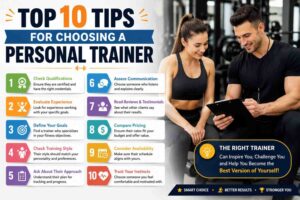
Choosing the right personal trainer can make your fitness journey safer, clearer, and more effective. A good trainer does more than stand beside you during workouts. They help you understand your body, improve your movement, stay consistent, and train with a plan that matches your goals. Whether you are a beginner, returning after a break, or trying to improve your strength, the right coach can help you avoid common mistakes.
The challenge is that not every trainer has the same level of knowledge, professionalism, or communication skill. Some trainers are excellent at creating safe and realistic programs. Others may rely too much on generic routines, extreme motivation, or quick-fix promises. That is why learning the Top 10 Tips for Choosing a Personal Trainer is important before you spend money on personal training services.
This guide explains what to check before hiring a trainer, how to compare your options, what questions to ask, and which warning signs to avoid. It is written for beginners, but it also gives enough detail for anyone who wants to make a more informed hiring decision.
Why Choosing the Right Personal Trainer Matters
Choosing a personal trainer is not only about finding someone who knows exercises. It is about finding a professional who understands your goals, respects your limits, and knows how to guide your progress safely. A good trainer should help you train with better form, build confidence, and stay consistent even when motivation drops. This is especially important for beginners because early mistakes can lead to poor habits or injury.
The right personal trainer also saves time. Instead of guessing which workouts to follow, you get a structured plan that matches your fitness level. This can help you avoid doing random exercises without a clear purpose. A professional trainer should also know when to push you and when to slow things down.
The Top 10 Tips for Choosing a Personal Trainer start with understanding why the choice matters. You are trusting this person with your time, effort, money, and physical safety. That is why their qualifications, communication style, and training process should be reviewed carefully before you commit.
A Good Trainer Builds Around Your Fitness Goals
A professional trainer should never use a one-size-fits-all approach. Your fitness goals should guide the entire training plan. Someone who wants to lose weight may need a mix of strength training, cardio, habit support, and progress tracking. Someone who wants to build muscle may need a structured resistance training plan with progressive overload. A beginner may first need to learn basic movement patterns before lifting heavier weights.
A good trainer will ask specific questions before planning your workouts. They may ask what you want to achieve, how often you can train, what exercises you enjoy, and what has stopped you in the past. This helps them create a workout plan that feels realistic. When a trainer understands your goals clearly, they can create a plan that is safer, more focused, and easier to follow.
Safety Should Come Before Intensity
A safe trainer understands that harder is not always better. Intensity can be useful, but only when it matches your ability, health status, and training history. Before starting intense workouts, your trainer should ask about injuries, medical conditions, medications, previous exercise experience, and any movement limitations. If needed, they should recommend speaking with a doctor before beginning a new program.
Safety also includes proper warm-ups, exercise modifications, form correction, and recovery planning. If a trainer ignores pain, dizziness, joint discomfort, or poor form, that is a serious concern. A professional fitness coach should help you improve without pushing you into unnecessary risk. The best personal trainer is not the one who makes every session exhausting. It is the one who helps you progress with control, confidence, and consistency.
Check Certifications, Qualifications, and Professional Standards
One of the most important Top 10 Tips for Choosing a Personal Trainer is checking credentials. Certification does not automatically make someone a great coach, but it does show that they have studied core topics like anatomy, exercise science, program design, and client safety. A trainer with no recognized qualification may still know some exercises, but they may not understand how to adjust a program for different bodies, goals, and limitations.
Professional standards also matter because personal training involves responsibility. A trainer should know their scope of practice, meaning they should understand what they are qualified to do and when to refer a client to another professional. For example, a trainer can often provide general fitness guidance, but they should not diagnose medical conditions or prescribe medical treatment.
When reviewing personal trainer qualifications, ask direct questions. A serious trainer should be comfortable sharing their certification details, training background, and continuing education. If they avoid the question or say certification does not matter at all, that can be a warning sign.
Look for Recognized Personal Trainer Certifications
When choosing a certified personal trainer, look for respected organizations such as ACSM, ACE, NASM, or NSCA. These organizations are widely known in the fitness industry and provide structured education for personal trainers. Some certifications are also NCCA-accredited, which adds another layer of credibility because the certification process meets recognized standards.
You do not need to understand every certification in detail, but you should ask the trainer which certification they hold and whether it is current. Fitness knowledge changes over time, so continuing education is important. A trainer who keeps learning is usually more prepared to work with different clients. If you are hiring a trainer for a specific need, such as strength training, older adult fitness, or beginner weight loss, ask whether they have extra education in that area.
Ask About CPR and AED Training
CPR and AED training are important because gyms and training studios are physical environments where emergencies can happen. A trainer does not need to be a doctor, but they should know how to respond if a client feels faint, has chest discomfort, or experiences a serious emergency during exercise. This is especially important when working with older adults, beginners, or people returning to exercise after a long break.
Asking about CPR and AED training also tells you how seriously the trainer takes safety. A professional trainer should not be offended by this question. Instead, they should see it as a normal part of responsible coaching. If they work in a gym, the facility should also have safety procedures in place. A strong trainer combines exercise knowledge with basic emergency awareness.
Match the Trainer’s Experience With Your Needs
Experience matters, but it needs to be the right kind of experience. A trainer may have years of general gym experience but limited experience with your specific goal. For example, coaching competitive athletes is different from helping a beginner build confidence. Training someone for muscle gain is different from helping someone improve mobility, lose weight, or return to exercise after injury clearance.
When reviewing experience, look for relevance. Ask whether the trainer has worked with people similar to you in age, fitness level, schedule, and goals. This does not mean they need to have trained someone exactly like you, but they should understand the challenges you may face. A trainer who works well with beginners should be patient, clear, and able to explain exercises without making you feel embarrassed.
The Top 10 Tips for Choosing a Personal Trainer are not just about checking boxes. They are about finding a trainer whose knowledge and coaching style match your real needs. The better the match, the easier it becomes to build a strong working relationship.
Choose Experience That Fits Your Goal
If your goal is weight loss, choose a trainer who understands habit building, realistic progress, and sustainable exercise planning. They should not focus only on burning calories during sessions. They should help you build consistency, improve strength, and create a routine you can maintain. If your goal is strength training, look for someone who understands form, progressive overload, recovery, and safe lifting technique.
If you are a beginner, the best personal trainer for you may be someone who explains things slowly and clearly. Beginners often need help learning basic movements, understanding gym equipment, and building confidence. If you have previous injuries, choose a trainer who is careful, asks good questions, and knows when to refer you to a medical professional. Experience should always match your goal, not just the trainer’s personal fitness background.
Ask for Real Examples, Not Big Promises
A trustworthy trainer should be able to explain how they help clients progress without making unrealistic claims. They may not share private client details, but they can describe their general process. For example, they might explain how they assess a beginner, how they build a workout plan, or how they adjust training when progress slows down. This gives you a better idea of how they think.
Be careful with trainers who promise fast transformations, guaranteed fat loss, or extreme results in a short time. Real fitness progress depends on many factors, including consistency, nutrition, sleep, recovery, stress, and your starting point. A good trainer will be honest about this. They will encourage you, but they will not sell false hope. Clear process is more valuable than big promises.
Review Their Training Style and Communication
A trainer’s communication style can make or break the experience. You may train with this person every week, so you need to feel comfortable asking questions, giving feedback, and explaining concerns. Good communication builds trust. Poor communication can make training stressful, confusing, or discouraging.
Some trainers use a high-energy style. Others are calmer and more educational. Neither style is automatically better. What matters is whether the trainer’s approach helps you stay motivated and safe. If you feel nervous, judged, or ignored during a consultation, that may not be the right fit.
Professional communication also includes clear instructions. A good trainer should explain what exercise you are doing, why it matters, and how to perform it correctly. They should not overload you with technical terms, but they should give enough detail to help you understand. When choosing a personal trainer, pay close attention to how they speak, listen, and respond to your needs.
Choose a Coaching Style That Motivates You
Different people respond to different coaching styles. Some clients like a trainer who is energetic and pushes them with strong accountability. Others prefer a calm coach who explains each step and builds confidence slowly. There is no single perfect style for everyone. The best personal trainer for you is someone whose coaching approach makes you feel supported, not pressured.
A trial session can help you understand their style before you commit to a package. Notice whether they correct your form respectfully, explain movements clearly, and adjust exercises when something feels too hard. A good trainer should challenge you, but the challenge should feel purposeful. Motivation should come from progress, confidence, and trust, not fear or embarrassment.
Good Trainers Listen Before They Teach
Listening is one of the clearest signs of a professional fitness coach. Before giving advice, a trainer should understand your goals, lifestyle, injuries, stress level, training history, and schedule. This information helps them design a realistic plan. A trainer who skips the listening stage may give you a routine that looks good on paper but does not fit your life.
Good listening also shows respect. If you say an exercise hurts, the trainer should take it seriously. If your schedule is busy, they should help you create a practical routine instead of blaming you. The trainer-client relationship works best when communication goes both ways. A trainer should guide you, but they should also adjust based on your feedback and progress.
Compare Training Plans, Progress Tracking, and Personalization
Personal training should feel personal. If a trainer gives every client the same routine, the service may not be worth the cost. A strong training plan should be based on your goals, current fitness level, movement ability, schedule, and preferences. This is why an assessment is important before regular sessions begin.
Progress tracking is another key part of quality coaching. Without tracking, it is difficult to know whether the plan is working. Progress can include more than weight loss. It can include better strength, improved endurance, better posture, more energy, reduced pain during movement, improved confidence, or better exercise consistency.
When comparing personal training services, ask how the trainer creates plans and measures results. Their answer should be clear and practical. You do not need a complicated system, but you do need a method. A trainer who tracks progress can make smarter adjustments and help you stay focused when results feel slow.
Ask How They Build Your Workout Plan
A professional trainer should be able to explain how they create your workout plan. They may start with an assessment of your movement, strength, endurance, and goals. Then they should choose exercises that match your ability. For beginners, this may mean starting with basic movement patterns such as squats, hinges, presses, pulls, and core stability.
The plan should also include progression. Progression means the workouts become more challenging over time in a controlled way. This may involve adding weight, increasing repetitions, improving range of motion, or reducing rest periods. A good trainer does not make changes randomly. They adjust your plan based on performance, recovery, and confidence. This is what separates professional coaching from random workouts.
Make Sure Progress Is Measured
Progress tracking helps both you and your trainer make better decisions. If your goal is strength, your trainer may track weights, repetitions, and form quality. If your goal is weight loss, they may track workout consistency, measurements, energy levels, and strength improvements. If your goal is general fitness, they may track endurance, mobility, and recovery.
A good trainer should also review your progress regularly. This does not need to happen every session, but there should be planned check-ins. These reviews help identify what is working and what needs to change. Without tracking, it is easy to feel stuck even when you are improving. Progress measurement gives you proof that your effort is moving you forward.
Training Factor Comparison Table
| What to Check | Good Sign | Warning Sign |
|---|---|---|
| Certification | Current recognized certification | No proof of qualification |
| Assessment | Asks about goals, injuries, history | Starts hard workout immediately |
| Program design | Builds a custom plan | Gives same routine to everyone |
| Communication | Explains clearly and listens | Talks over you or ignores concerns |
| Progress tracking | Reviews results and adjusts | Never changes the plan |
| Nutrition advice | Gives general guidance within scope | Prescribes strict medical meal plans |
| Pricing | Clear package and cancellation terms | Hidden fees or pressure sales |
| Safety | Checks form and intensity | Pushes pain as “normal” |
Understand Pricing, Schedule, and Training Format
Pricing is an important part of choosing a personal trainer, but it should not be the only factor. A very cheap trainer may not provide enough support, while an expensive trainer may not always be the best fit. The goal is to compare value. You want to understand what is included, how sessions are structured, how progress is reviewed, and what support you receive outside the session.
Your schedule also matters. A trainer may be highly qualified, but if their availability does not match yours, consistency will be difficult. Training works best when it fits your real life. Before buying a package, think about how many days per week you can train, what time works best, and whether you prefer morning, evening, or weekend sessions.
The training format is also important. In-person sessions offer direct form correction and real-time coaching. Online personal training can offer flexibility and lower cost in some cases. The right option depends on your experience, confidence, and goals.
Ask What Is Included in the Price
Before paying, ask exactly what the price includes. Some trainers charge only for the session itself. Others include workout plans, progress reviews, app access, form checks, accountability messages, or basic habit coaching. Knowing this helps you compare trainers fairly instead of judging only by session cost.
You should also ask about cancellation rules, package expiry dates, missed sessions, payment terms, and refund policies. Clear pricing shows professionalism. If a trainer avoids answering these questions or pressures you to buy quickly, take your time before deciding. Personal training is an investment, so you should understand the full agreement before committing.
Decide Between Online and In-Person Training
Online personal training can work well for people who already understand basic exercise form and want flexibility. It may include video workouts, written plans, app tracking, and remote check-ins. This option can be useful if you have a busy schedule or cannot find the right trainer nearby.
In-person training is often better for beginners or anyone who needs live form correction. A trainer can watch your movement, adjust your position, and correct mistakes immediately. If you search for “personal trainer near me,” still take time to check credentials, reviews, and consultation quality. Location is useful, but it should not be the only reason you choose someone.
Know the Red Flags Before You Hire
Red flags can protect you from wasting money or putting your health at risk. A trainer may look confident online, but their real coaching habits matter more. If they ignore safety, avoid questions, or make unrealistic promises, you should be careful. A professional trainer should be transparent, respectful, and focused on your long-term progress.
One major warning sign is a trainer who pushes intensity before understanding your body. Another is a trainer who uses shame or fear as motivation. Fitness should challenge you, but it should not make you feel unsafe or humiliated. A good trainer builds confidence while still holding you accountable.
The Top 10 Tips for Choosing a Personal Trainer include knowing when to walk away. If something feels wrong during the consultation or trial session, trust that signal. You do not need to hire the first trainer you meet. Comparing options is a smart and responsible step.
Avoid Trainers Who Ignore Pain or Medical Limits
Pain should never be ignored. Normal muscle effort can feel challenging, and mild soreness may happen after new workouts. However, sharp pain, joint pain, dizziness, chest discomfort, or unusual symptoms should be taken seriously. A trainer who tells you to push through every type of pain is not using a safe coaching approach.
A professional trainer should know how to modify exercises when needed. They should also understand when a situation is outside their scope. If you have a medical condition, recent surgery, or injury history, the trainer should ask careful questions and may recommend guidance from a doctor or physical therapist. Safe training is not weak training. It is smart training.
Be Careful With Extreme Diet Claims
Nutrition is closely connected to fitness, but trainers must stay within their professional scope. Many trainers can provide general healthy eating guidance, such as encouraging balanced meals, hydration, protein awareness, and consistent habits. However, strict meal plans, medical nutrition therapy, and supplement prescriptions may require a registered dietitian, doctor, or another qualified professional.
Be cautious if a trainer promises rapid fat loss through extreme diets, detoxes, or unnecessary supplements. These claims are often not sustainable and may not be safe for everyone. A good trainer will encourage realistic nutrition habits and refer you to the right professional when your needs go beyond general advice. This shows responsibility, not weakness.
Questions to Ask Before Hiring a Personal Trainer
Asking the right questions helps you make a confident decision. A consultation should not feel like a sales pitch only. It should give you a clear understanding of the trainer’s qualifications, process, communication style, and expectations. The more clearly they answer, the easier it is to judge whether they are the right fit.
Questions also help you avoid misunderstandings. For example, you may assume nutrition support is included, but the trainer may only provide workouts. You may expect weekly progress reviews, but the trainer may not offer them. Asking early protects your time, money, and expectations.
Before hiring, prepare a short list of questions. You do not need to make the conversation formal, but you should cover the basics. The trainer’s answers will show whether they are professional, organized, and client-focused. This is one of the most useful Top 10 Tips for Choosing a Personal Trainer because it gives you practical control over the hiring process.
Ask These Questions in the Consultation
Start by asking about certification, CPR/AED training, and experience with clients like you. Then ask how they assess new clients, build workout plans, and track progress. These questions reveal whether they have a structured process or simply create workouts as they go.
You should also ask about communication. For example, can you message them between sessions? Do they provide workouts for days you train alone? How often do they review your results? Finally, ask about pricing, cancellations, and package terms. A professional trainer should answer clearly. If their answers feel vague or rushed, continue comparing other options before committing.
Use a Simple Hiring Checklist
A checklist makes the decision easier. Before hiring a trainer, confirm that they have a recognized certification, ask about your goals, review your health history, explain their process, and provide clear pricing. They should also respect your limits, correct your form, and track your progress over time.
You should also trust how you feel during the consultation. Do they listen carefully? Do they explain things in simple language? Do they make you feel comfortable asking questions? If the answer is yes, that is a strong sign. If they pressure you, shame you, or avoid details, it is better to keep looking. The right trainer should feel professional and supportive from the beginning.
Frequently Asked Questions
Many people feel unsure before hiring a personal trainer, especially if they are new to fitness. That is normal. Personal training can be a valuable service, but only when you choose someone who is qualified, honest, and aligned with your goals. The questions below answer common concerns people have before booking a session.
These FAQs also support better decision-making because they focus on real search intent. Some readers want to know about certifications. Others want to understand pricing, weight loss support, online coaching, or meal plans. By answering these questions clearly, this guide helps both beginners and more experienced readers choose personal training services with more confidence.
If you are comparing trainers right now, use these answers as a quick review before scheduling a consultation. They can help you avoid common mistakes and focus on what matters most.
Quick Answer About Top 10 Tips for Choosing a Personal Trainer
The best way to choose a personal trainer is to look beyond appearance, social media popularity, or gym sales pressure. A qualified trainer should have a recognized certification, practical experience, clear communication, and a safe training process. They should ask about your fitness goals, medical history, current activity level, injuries, schedule, and training preferences before creating a workout plan.
In my experience, the Top 10 Tips for Choosing a Personal Trainer come down to trust, safety, personalization, and consistency. A good trainer should explain exercises clearly, correct your form, track your progress, and adjust your plan when needed. They should also be honest about what they can and cannot do, especially with nutrition advice. The right trainer will not promise overnight results. Instead, they will help you build realistic habits that support long-term progress.
What should I look for when choosing a personal trainer?
When choosing a personal trainer, look for recognized certification, relevant experience, clear communication, and a safe training process. The trainer should ask about your goals, health history, injuries, schedule, and current fitness level before creating a workout plan. They should also explain exercises clearly and track progress over time. A good trainer should make you feel supported, not judged or pressured.
How do I know if a personal trainer is qualified?
You can check whether a personal trainer is qualified by asking about their certification, CPR/AED training, and practical experience. Recognized organizations include ACSM, ACE, NASM, and NSCA. You can also ask whether their certification is current and whether they complete continuing education. A qualified trainer should be willing to explain their background clearly and professionally without avoiding your questions.
Is hiring a personal trainer worth it?
Hiring a personal trainer can be worth it if you need structure, accountability, safe form correction, and a plan that fits your goals. It is especially helpful for beginners, people returning after a break, or anyone who feels unsure in the gym. The value depends on the trainer’s skill, your consistency, and whether the training plan matches your lifestyle and goals.
How many sessions do I need with a personal trainer?
The number of sessions you need depends on your goal, experience level, budget, and confidence. Some people need only a few sessions to learn proper form and build a basic routine. Others benefit from weekly sessions for accountability and progression. A good approach is to start with a short package or trial period before committing to a long-term plan.
Can a personal trainer help with weight loss?
Yes, a personal trainer can support weight loss by creating a consistent exercise plan, improving strength, increasing activity, and helping you stay accountable. However, weight loss also depends on nutrition, sleep, stress, and daily habits. A responsible trainer will not promise instant fat loss. Instead, they will help you build realistic routines that support long-term results.
Can a personal trainer give me a meal plan?
A personal trainer may offer general nutrition guidance if it fits their training and local scope of practice. However, detailed medical meal plans, treatment diets, or nutrition therapy should usually come from a registered dietitian, doctor, or qualified nutrition professional. If a trainer gives strict diet instructions, ask about their nutrition credentials before following the plan.
Conclusion
The Top 10 Tips for Choosing a Personal Trainer all point to one main idea: choose carefully, not quickly. A personal trainer should be qualified, professional, safe, and able to create a plan that fits your real life. Do not choose someone only because they look fit, have many followers, or offer the cheapest package. Those factors do not always show coaching quality.
A good trainer should listen first, assess your needs, explain their process, and guide you with patience. They should help you build strength, improve confidence, and stay consistent without using fear or unrealistic promises. They should also know their limits, especially when it comes to medical concerns and nutrition advice.
Before hiring, compare certifications, experience, pricing, communication style, and progress tracking. Ask questions and use a checklist. The right trainer can make your fitness journey safer, clearer, and more sustainable.